
Last updated November 15, 2026
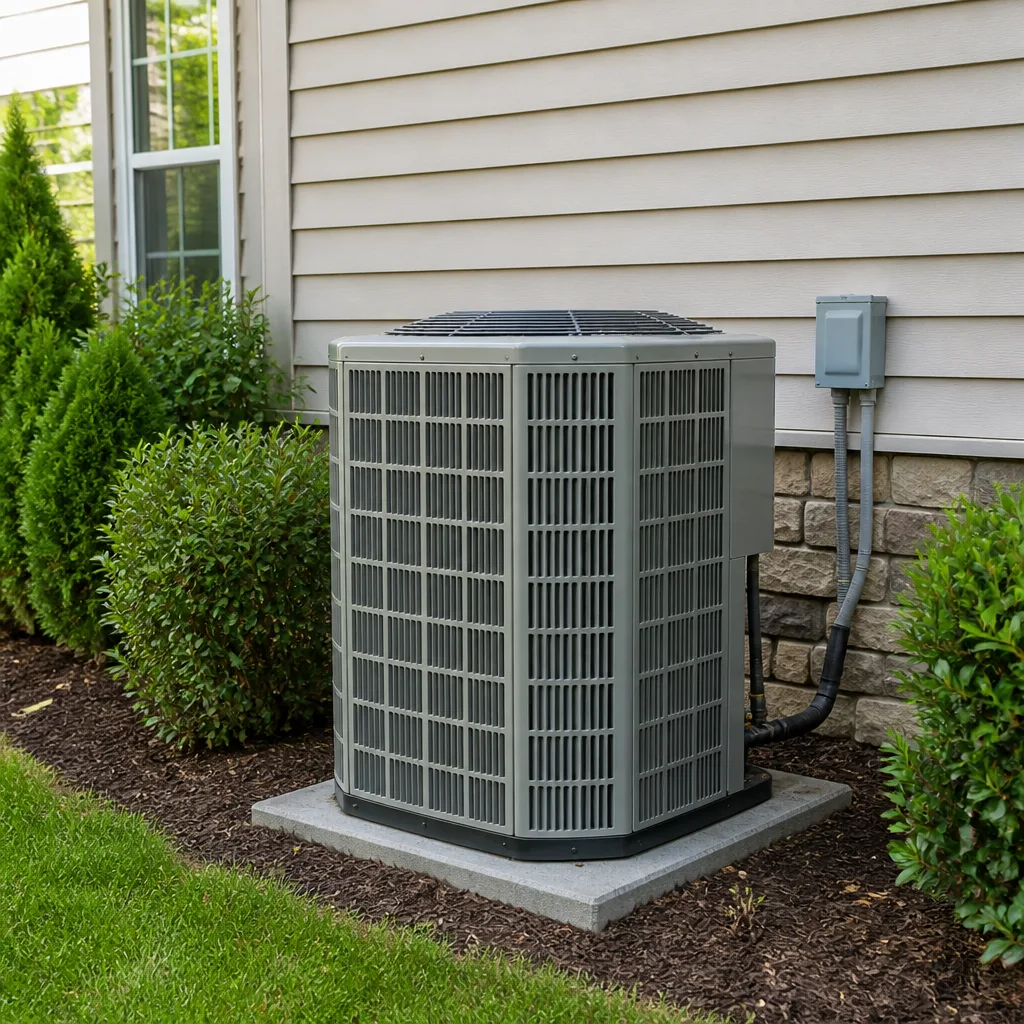 AC repair
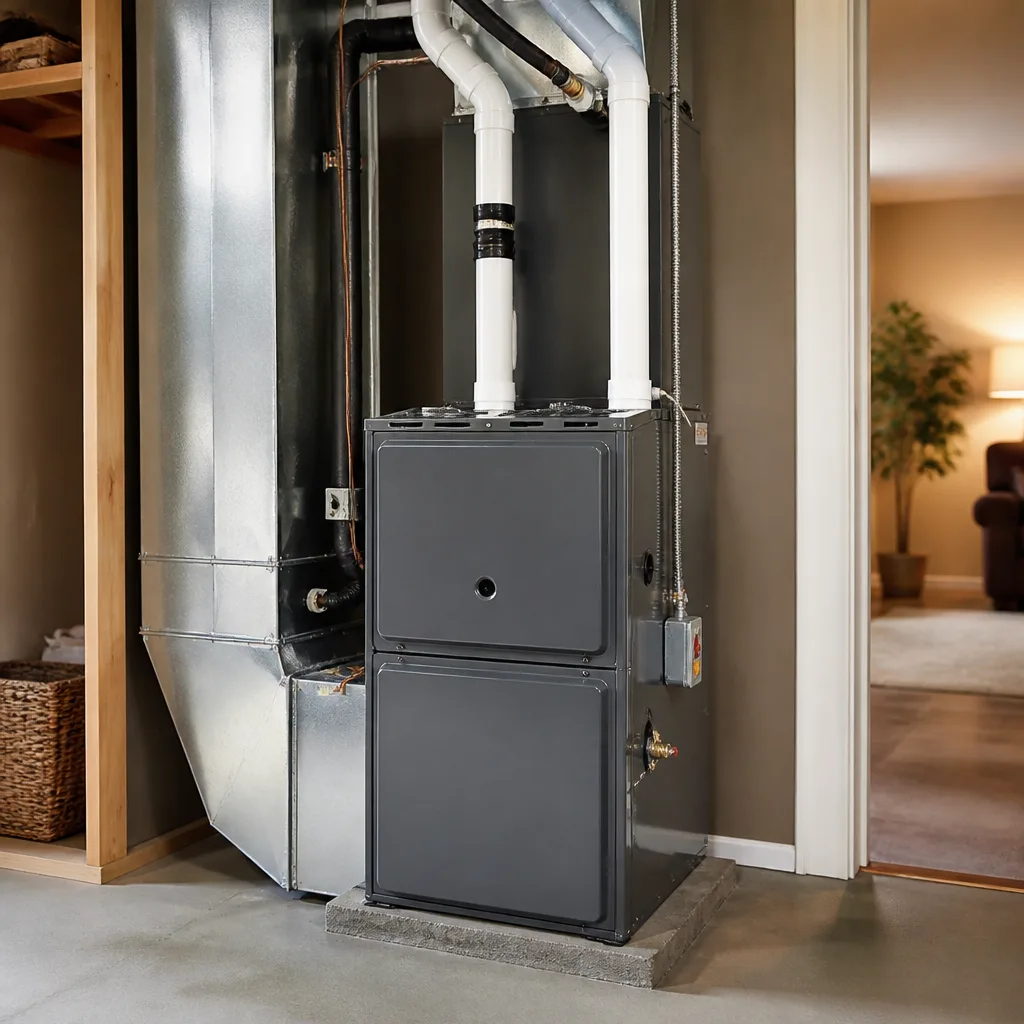 Furnace & heating
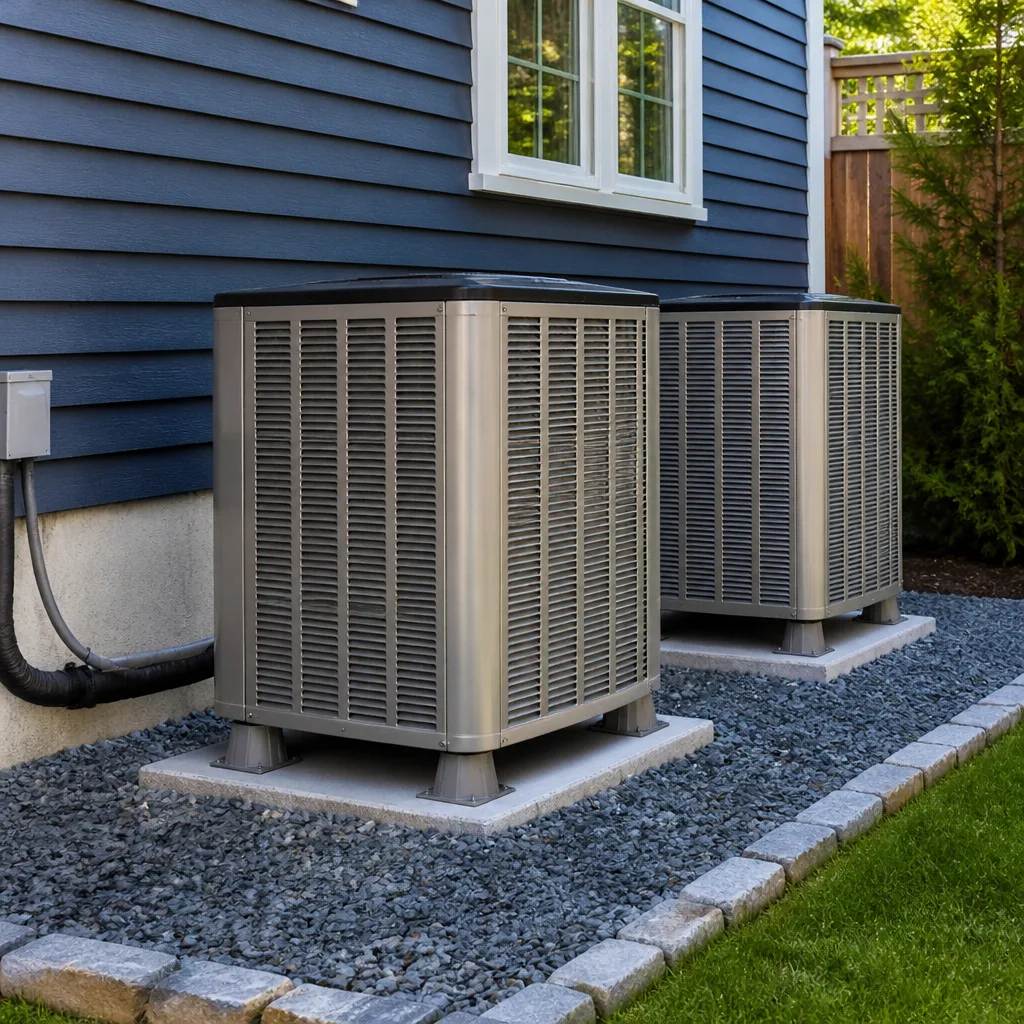 Heat pumps
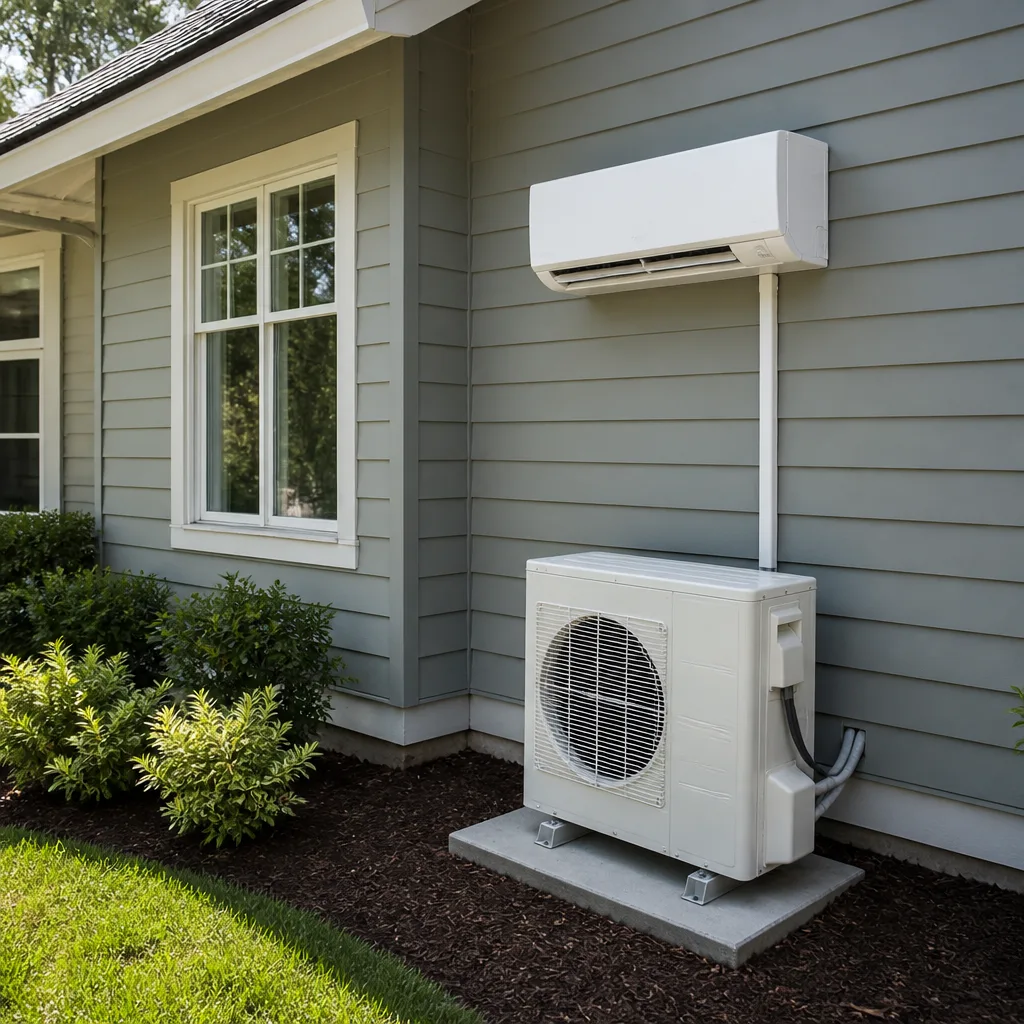 Ductless mini splits
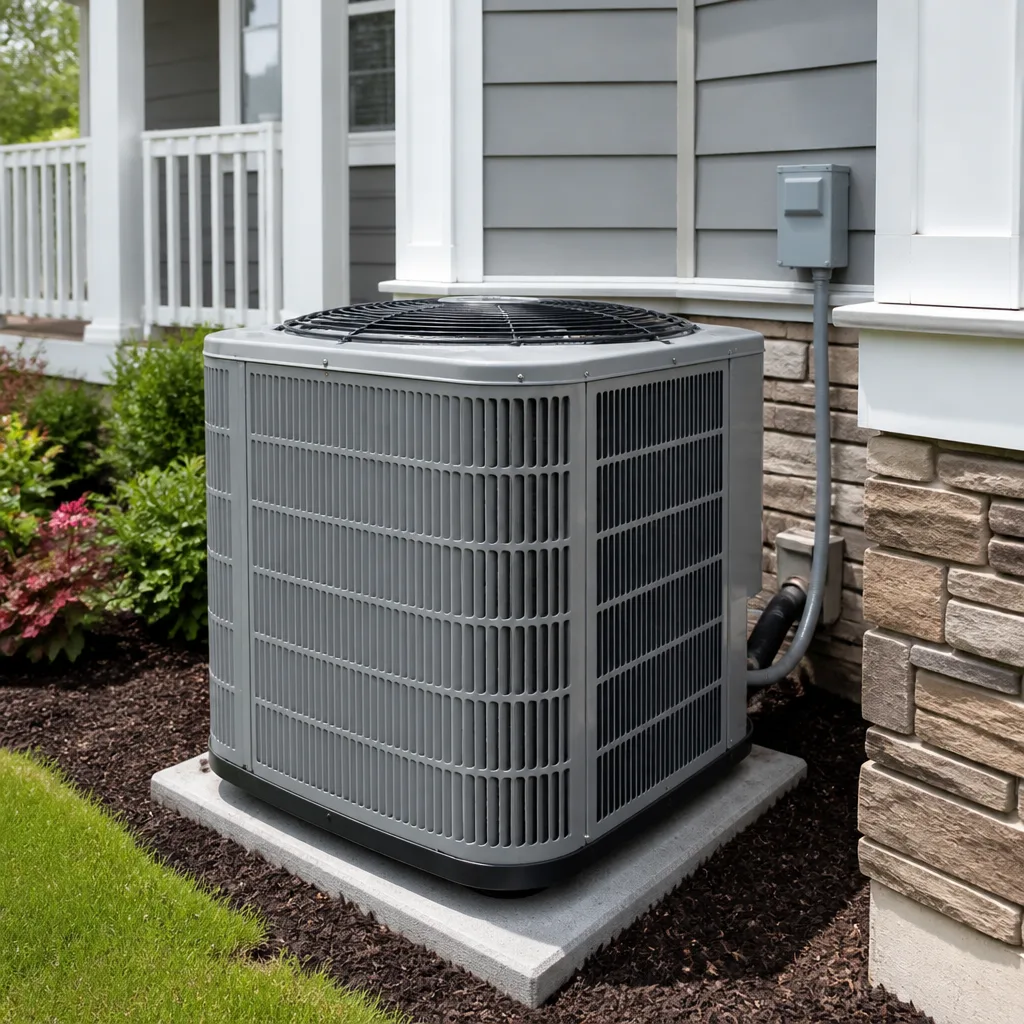 Carrier
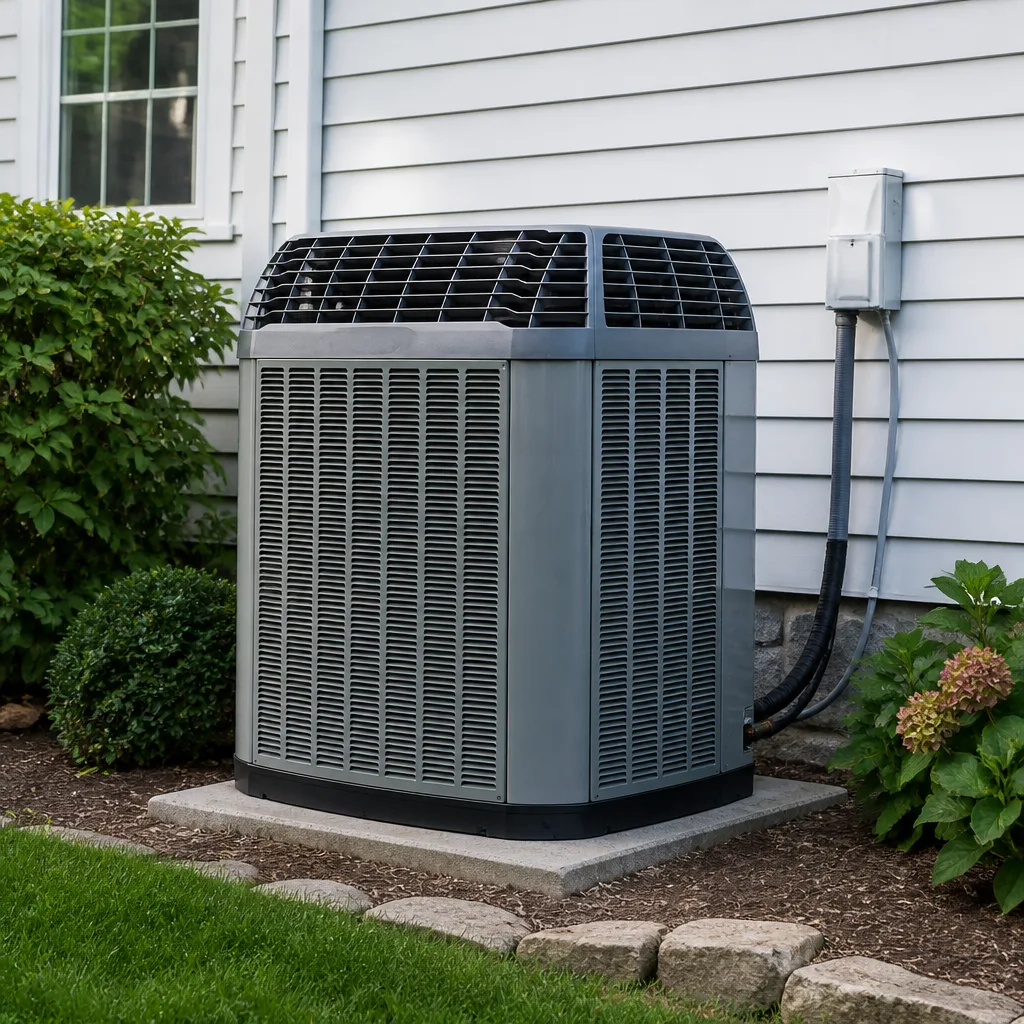 Trane
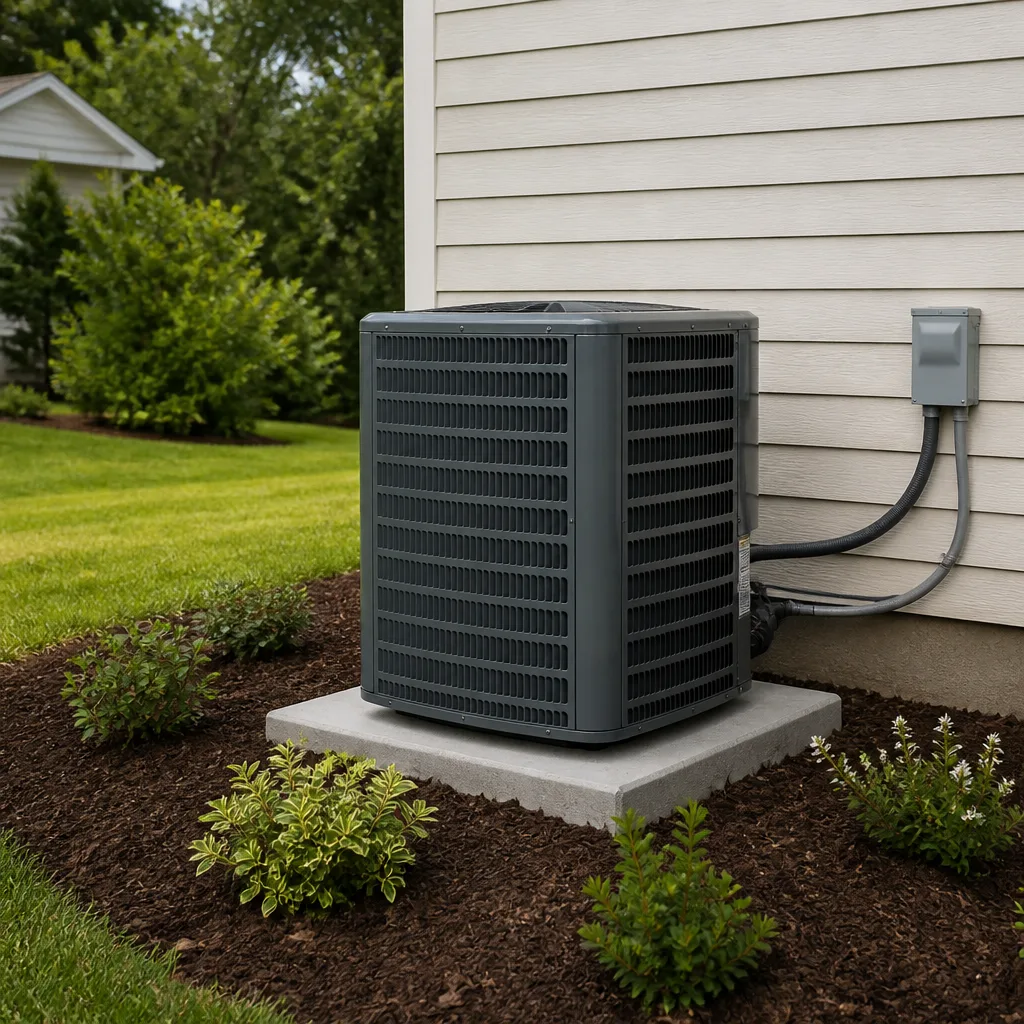 Goodman
Seasonal tune-up and full diagnostic on your Carrier, Trane, or Goodman system - readings shown to you before any repair is proposed
Diagnosis first, numbers second - you approve the repair price before a single part goes in.
Get your free estimateHVAC Emergency Preparedness Guide for Fremont Homes
Most homeowners treat an HVAC failure as a pure repair problem: something breaks, you call someone, it gets fixed. But the part you control happens before anything breaks. In our experience, the homeowners who come through a heat wave or a cold snap with the least disruption aren’t luckier than their neighbors. They simply wrote down where the shutoffs are, kept a few spares on a shelf, and decided in advance who they’d call.
This guide covers how HVAC emergencies actually play out in Fremont: the October heat, the winter storms, the smoke weeks. You’ll get a scenario-by-scenario response plan, the four shutoffs to label before anything fails, which spare parts are safe to keep, and how to set up a working relationship with a local company so you’re a known customer instead of a caller in a queue.
Quick Answer
An HVAC emergency plan for a Fremont home comes down to four things: knowing where your system’s shutoffs are and labeling them, keeping a small set of safe spare parts and filters on hand, understanding which rooms can realistically be kept livable with portable cooling or heating, and already having a repair company you’ve used before. Doing these four things before a failure means you respond in minutes instead of scrambling for days when the heat or the storms arrive.
Styles & brands we work with
- AC repair
- Furnace & heating
- Heat pumps
- Ductless mini splits
- Carrier
- Trane
- Goodman
Table of Contents
- Why Fremont Homes Face Predictable HVAC Emergencies
- The Fremont HVAC Emergency Scenario Matrix
- The Four Shutoffs Every Fremont Homeowner Should Locate and Label
- A Realistic Portable Cooling Assessment for Fremont Floor Plans
- Safe Spare Parts to Keep on Hand
- How to Build a Service Relationship Before You Need One
- What Happens When You Call
- Brand Knowledge That Matters When You’re in a Hurry
Why Fremont Homes Face Predictable HVAC Emergencies
Fremont sits in a place where the weather swings in ways that put real strain on HVAC equipment. The city runs from the bay-adjacent flats out to warmer inland neighborhoods, and the systems in these homes get worked harder than the mild-sounding climate would suggest. The temperature swings are not extreme every day, but when they do arrive they come fast, and that’s what catches systems off guard.
The equipment itself is often older than homeowners realize. A furnace or AC that has run quietly for a decade can be pushed past its limits by a sudden demand it wasn’t designed for. When the heat dome settles in during October – the month that reliably delivers Fremont’s hottest stretches – air conditioners that have coasted all summer get asked to run at full capacity for days. When an atmospheric river rolls through in winter, moisture and wind find the gaps around condensers, disconnect boxes, and air handlers in garages and closets.
Then there’s smoke. Wildfire smoke events push homeowners to close everything up and run the system hard, which can clog filters faster than normal and, in some setups, pull smoke into the return side if the filter is overdue. None of this is exotic. These are the three patterns we prepare Fremont homeowners for, and the response to each is different. A plan built around those specific patterns is what this guide gives you.
The Fremont HVAC Emergency Scenario Matrix
Not every HVAC emergency calls for the same response. A failed AC in October heat is a safety issue with a cooling protocol. A failed furnace during a cold, wet storm is a different problem with a different step order. Here’s how each scenario should be handled.
Scenario 1: AC Failure During an October Heat Dome
October is when Fremont’s cooling systems work the hardest. If the AC quits during a hot stretch, the priority is keeping the house livable, not waiting on a callback.
- Check the easy things first. Confirm the thermostat is set to cool and the fan is on auto. Check the air filter – a clogged filter can cause a system to overheat and shut down. Check the breaker at the panel; a tripped breaker is common and resettable once.
- Move the household to the coolest zone. Lower floors and north-facing rooms stay cooler. Close blinds on sun-facing windows and use fans to move air.
- Deploy portable cooling to one central room rather than trying to cool the whole house. (See the portable cooling section below.)
- Call and get in the queue. The earlier you call, the earlier your slot. We answer 24/7. Fast dispatch from 7am to 7pm, Sunday through Friday.
Scenario 2: Furnace Failure During an Atmospheric River Cold Snap
Winter storms in Fremont bring wind, rain, and damp cold. A furnace that fails during one of these events is urgent because the house loses its only heat source while it’s also wet outside.
- Check the filter and the breaker. Same drill – a dirty filter or tripped breaker accounts for a surprising share of no-heat calls.
- Confirm the gas is on at the furnace valve (more on locating it below).
- Consolidate the household into one room and use blankets and layers. Portable space heaters are fine short-term but never left unattended and never near fabric.
- Call for furnace repair early. A wet, cold stretch is when no-heat calls spike. Getting into the queue on the first cold morning beats waiting until the house has been cold for a day.
Scenario 3: Smoke Infiltration Event
When wildfire smoke settles over the region, the instinct is to run the AC and seal the house. Both can backfire if the filter is overdue or the system isn’t drawing correctly.
- Change or check the filter before running the system hard. A loaded filter loses effectiveness fast under smoke conditions.
- Keep windows and doors closed and avoid running bathroom and kitchen exhaust fans, which pull outside air in.
- Run the system on fan-only during the worst hours if your thermostat allows it, which circulates air through the filter without overworking the compressor.
- If the system starts short-cycling or the house won’t cool, call. A system that’s struggling under smoke load may need a diagnostic before it fails outright.
One more thing about smoke season: it’s also when a lot of Fremont homeowners discover their filter size the hard way. Write the size inside the filter door or on a note taped to the air handler now, so you’re not guessing in the middle of a smoke week.
The Four Shutoffs Every Fremont Homeowner Should Locate and Label
Locating your shutoffs takes maybe fifteen minutes and is the single highest-value thing you can do before an emergency. Label each one with a strip of tape and a marker. Do this before you need it, not during.
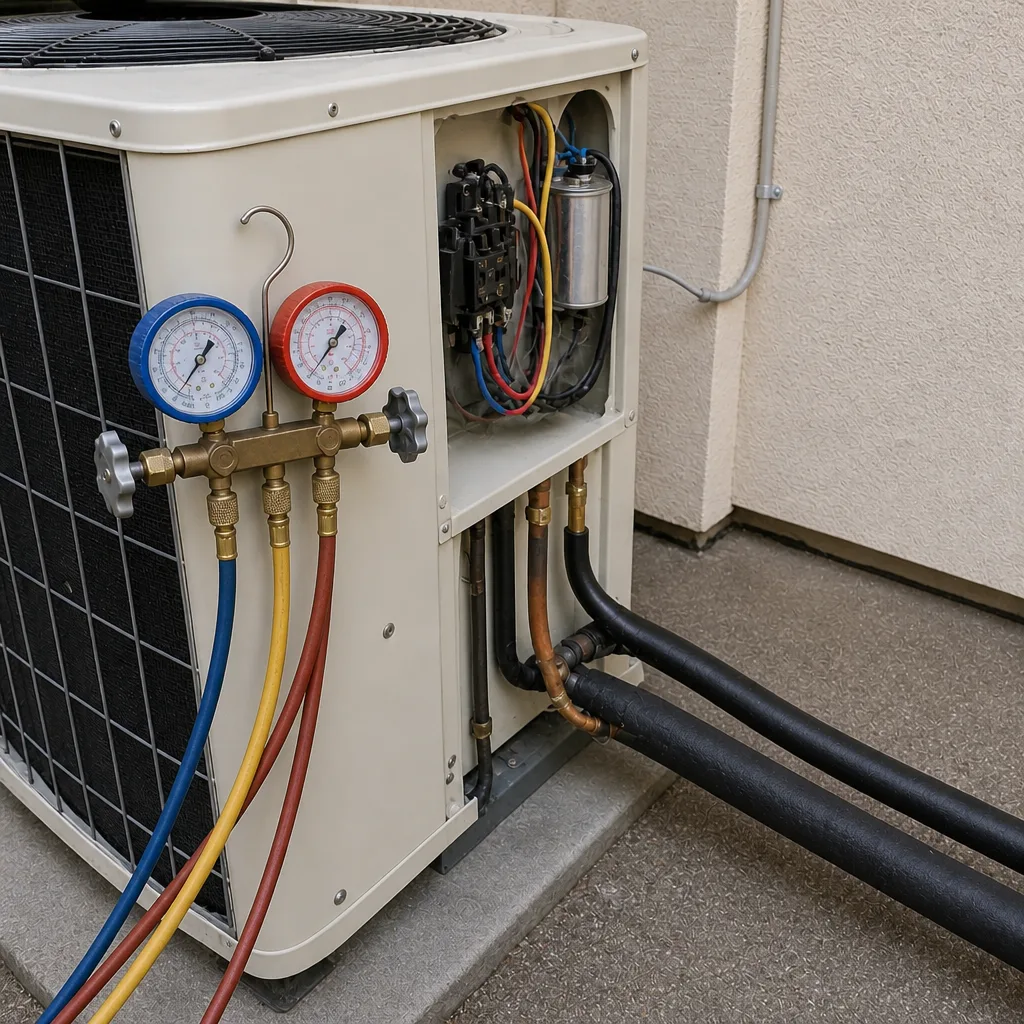
- Condenser disconnect. Outside next to the AC unit, there’s a disconnect box – often a small gray or beige box mounted on the wall or set on a post. It usually has a pull-out handle or a switch. This cuts power to the outdoor unit. If the outdoor unit is making a loud noise, smell like burning, or the fan won’t stop, this is what you pull.
- Air handler breaker. The indoor unit (the air handler, often in the garage, attic, or a closet) has its own breaker at the main panel, usually labeled “AC,” “Air Handler,” or “Furnace.” Know which one it is. If your panel isn’t labeled, label it yourself now.
- Gas shutoff at the furnace. A furnace has a gas valve on the supply line, usually a lever-style valve near where the pipe enters the unit. In a gas smell or suspected leak, you shut this off and get out of the house and call from outside. Don’t hunt for it during a leak – find it now.
- Condensate overflow switch. This is a small float switch on the condensate drain line near the air handler. When the drain clogs, the switch shuts the system down to prevent water damage. Knowing where it is helps you explain the problem to a technician, and on some systems you can reset it after clearing a clog.
A word of caution: gas lines and electrical panels are not do-it-yourself territory. Locating and labeling a shutoff is safe. Opening a panel, working on wiring, or disconnecting gas lines is not – those need a trained professional. If you ever smell gas, leave the house first and call from outside.
A Realistic Portable Cooling Assessment for Fremont Floor Plans
Portable and window units can’t cool a whole house, but they can keep one room livable during an AC outage. The trick is sizing and placement, and being honest about what your floor plan can actually do.
Sizing by room. A general rule of thumb is about 20 BTUs per square foot for a standard-height room. So a 150-square-foot bedroom needs roughly 5,000 BTUs, a 300-square-foot living room needs about 6,000 to 8,000, and a large open-plan space of 500 square feet or more needs 10,000 to 12,000. Undersizing is the most common mistake – a unit that’s too small runs constantly and cools poorly.
Which floor plans work. Single-story ranch homes common in Fremont’s older neighborhoods, with separate bedrooms, can usually keep one bedroom and the living area comfortable with two well-placed units. Two-story homes are trickier: the upper floor heats up and a portable unit in an upstairs bedroom works, but cooling the whole upstairs from one unit rarely does. Open-plan homes with vaulted ceilings are the hardest – the volume is large and the cool air stratifies. In those, pick the smallest enclosed room available and make that the refuge room.
Window versus portable. A window unit is more efficient and doesn’t need a drain, but it needs a window that opens and a secure fit. Portable units are more flexible but need a window kit for exhaust and a way to drain condensate – either a hose to a drain or a tank you empty. Check which of your windows can actually take a unit before the emergency, not during.
None of this replaces a working AC. It’s a bridge – a way to stay safe while you wait for a technician, not a permanent solution.
Safe Spare Parts to Keep on Hand
Some parts are safe for a homeowner to keep as spares. Others are not, and knowing the difference matters for your safety as much as your comfort. Here’s the short list of what’s reasonable to have on a shelf.
- Air filters. Keep two or three of the correct size. This is the single most useful spare. Replace every one to three months, and more often during smoke season.
- Capacitors. A failed capacitor is one of the most common reasons an AC or furnace won’t start. Keeping a spare can help, but replacement involves the electrical side of the unit and requires care with stored charge. Have one on hand if you’re comfortable, but let a technician do the swap. Never handle a capacitor without discharging it properly.
- Contactors. Similar story. A contactor is a switch that engages the compressor or blower. They fail, but replacing one is electrical work. Keep it as a spare for the technician’s visit, not for a DIY swap.
- Condensate tablets. These slow algae growth in the drain line and help prevent clogs that trip the overflow switch. Safe and easy to use.
- Thermostat batteries. A dead thermostat battery can look like a dead system. Keep a spare set.
A quick safety note on capacitors and contactors: both live in the electrical section of the equipment, and capacitors hold a charge even after power is off. This is exactly the kind of work that should be left to a trained professional. Keeping the part on hand can speed up a repair, but it doesn’t make the swap a homeowner task.
How to Build a Service Relationship Before You Need One
The biggest advantage in an HVAC emergency isn’t a spare part – it’s being an existing customer. When a heat wave hits and every company in the area is fielding calls, the homeowner whose system a technician has already seen and serviced gets scheduled faster than a cold call from someone nobody knows. Here’s how to get there.
- Get your system serviced before the season. A cooling tune-up in spring and a heating check in fall catch small problems before they become emergencies. It also puts your address in the company’s records.
- Keep the invoice and the technician’s notes. When you call about a problem, having the brand, model, and last service date ready saves time and helps the technician arrive prepared.
- Ask about a service agreement or maintenance plan. Many companies offer one. If you’re interested, ask what it includes – priority scheduling is the benefit that matters in an emergency.
- Save the number in your phone. Label it clearly. The last thing you want is to be searching for it while the house is 95 degrees.
- Use the same company for repairs and replacement. Full lifecycle coverage – AC installation, furnace repair, and furnace replacement – means the people who know your system are the ones who work on it.
That last point matters more than it sounds. When a company handles both the repair and the eventual replacement decision, nobody is pushing you toward a new system because it’s the only thing they sell. The recommendation is driven by your home’s load requirements and your budget.
What Happens When You Call
Knowing the sequence helps you stay calm and helps the call go faster. When you call for an HVAC emergency in Fremont, here’s the general flow:
- You describe the problem. What’s the system doing (or not doing)? When did it start? Is it blowing warm air, not turning on, making a noise, or tripping a breaker?
- You share the basics. Brand, approximate age, and last service date. This is where having your records pays off.
- You get scheduled. Fast dispatch from 7am to 7pm, Sunday through Friday. We answer 24/7, and a call outside dispatch hours is booked into the next opening.
- A technician arrives and diagnoses. You get a written estimate before any work begins. The price is set per job by that estimate.
- The repair happens, or you get a plan. If parts are needed, the technician tells you what’s required and when the work can be completed.
If your systems have never been serviced by us, that’s fine. Our technicians have up to 8 years of experience and work on equipment from Carrier, Trane, Lennox, American Standard, Goodman, Rheem, York, Daikin, and Bryant. Nine major brands, one call.
For the full range of what we handle in the city, see our Fremont service page. For cooling problems specifically, our Fremont AC Repair page covers the common failure patterns. And if you’re weighing a fix against a replacement, our AC installation page walks through what a new system involves.
Brand Knowledge That Matters When You’re in a Hurry
In an emergency, brand knowledge isn’t a luxury – it’s speed. A technician who has worked on your brand knows its common failure points, the parts that tend to go first, and the quirks of its control board. That shortens the diagnosis and the repair.
We service nine major brands: Carrier, Trane, Lennox, Goodman, Rheem, York, Daikin, Bryant, and American Standard. That range covers value-tier and premium-tier equipment, so whether your home has a Goodman furnace or a Trane AC, the technician isn’t learning your system on the clock.
It matters most at the moment of the capital decision. If a system is old enough that repair no longer makes sense, a brand-agnostic recommendation is worth more than a sales pitch. We recommend based on the home’s load requirements and your budget, not on what’s sitting in inventory. Carrier, Trane, Lennox, and American Standard are consistently rated among the most dependable lines available, and the right one for your home depends on its size, its ductwork, and how you use the space.
Our dual-system coverage – cooling and heating under one roof – also means a technician can catch cross-system issues that a single-trade contractor might miss. A furnace problem that looks like a heating fault can sometimes trace back to a control or airflow issue shared with the AC side. Furnace and AC specialists under one contact point means fewer hand-offs when it matters.
Common Mistakes to Avoid
- Not knowing where the shutoffs are. Hunting for the condenser disconnect or gas valve during a real problem wastes time and adds stress. Label them now.
- Waiting until the heat wave to call. During an October hot stretch, call volume spikes and scheduling fills fast. A call on the first hot day beats a call on the third.
- Running a smoky or clogged system on high. During a smoke event, a loaded filter makes the system work harder and cools worse. Check or change the filter before running it.
- Oversizing a portable unit or buying the wrong kind. A window unit that doesn’t fit your window is useless. Measure before you buy.
- Attempting electrical or gas work yourself. Capacitors, contactors, panels, and gas lines are trained-professional territory. Locating and labeling is fine; opening and swapping is not.
- Never having a service relationship. A cold call in a queue is the slowest way through an emergency. A customer with a service history gets scheduled first.
- Ignoring small symptoms. A system that short-cycles, trips a breaker once, or blows lukewarm air is telling you something. Address it before it becomes a no-cool or no-heat call.
See the difference
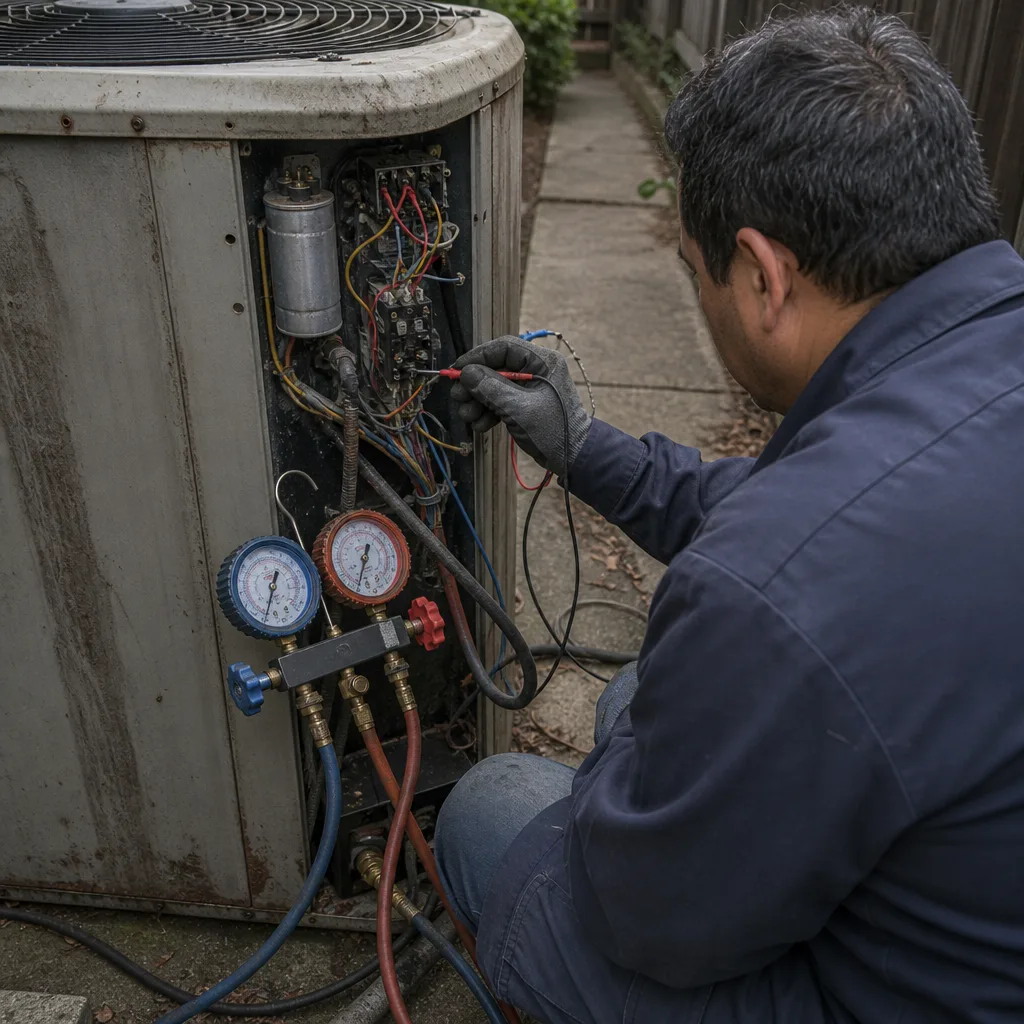 Before
 After
 Before
 After
 Before
 After
When to Call a Professional
Some problems are worth a call immediately. If you smell gas, leave the house and call from outside. If the system trips a breaker repeatedly, makes a burning smell, or the outdoor unit runs but doesn’t cool, stop resetting it and call. If the house has lost heat during a cold, wet stretch or lost cooling during a hot one and you have vulnerable household members, call right away rather than waiting to see if it recovers.
If you’ve checked the filter and the breaker and the system still won’t run, that’s your signal. Fremont AC Repair offers free estimates in Fremont. Call (855) 473-9061. We answer 24/7. Fast dispatch from 7am to 7pm, Sunday through Friday.
Frequently Asked Questions
Check the air filter and the breaker first, then call. A clogged filter and a tripped breaker are the two most common causes of an AC that won’t cool, and both are things you can check in a couple of minutes. If neither is the problem, get in the queue early. Call (855) 473-9061 for an exact quote – estimates are free.
It’s a lever-style valve on the gas supply line near where the pipe enters the furnace. It’s usually within arm’s reach of the unit. Find and label it now, before you need it. If you ever smell gas, shut it off if you can do so safely, leave the house, and call from outside.
No, those are electrical components and capacitors hold a charge even after power is off. Keeping a spare on hand is fine, but the swap should be done by a trained professional. Handling a charged capacitor or working inside the electrical section of the equipment can cause serious injury.
Roughly 20 BTUs per square foot. A 150-square-foot bedroom needs about 5,000 BTUs; a 300-square-foot living area needs about 6,000 to 8,000. Undersizing is the most common mistake, so size up rather than down.
Be an existing customer with a service history, and call early. Companies schedule existing customers faster than cold calls, and calling on the first hot day beats waiting until the queue fills. Call (855) 473-9061 for an exact quote – estimates are free.
That depends on the system’s age, the cost of the repair, and how often it’s failed recently. A technician can give you a written estimate for the repair and a comparison for replacement so you can decide with real numbers. Our furnace repair page covers the heating side of that decision. Call (855) 473-9061 – estimates are free.
The Bottom Line
HVAC emergencies in Fremont follow predictable patterns: October heat, winter atmospheric rivers, smoke events. The homeowners who recover fastest aren’t the ones with better luck – they’re the ones who labeled their shutoffs, kept a few safe spares, sized a portable unit for one room, and already had a company they’d used before. Do those four things once, and a system failure becomes a scheduling problem instead of a crisis. If you’d like help getting prepared, or you’re dealing with a failure right now, call us.
Call (855) 473-9061 for a free estimate on AC installation, furnace repair, or furnace replacement. We answer 24/7. Fast dispatch from 7am to 7pm, Sunday through Friday.
Written by the team at Fremont AC Repair.