
Last updated November 15, 2026
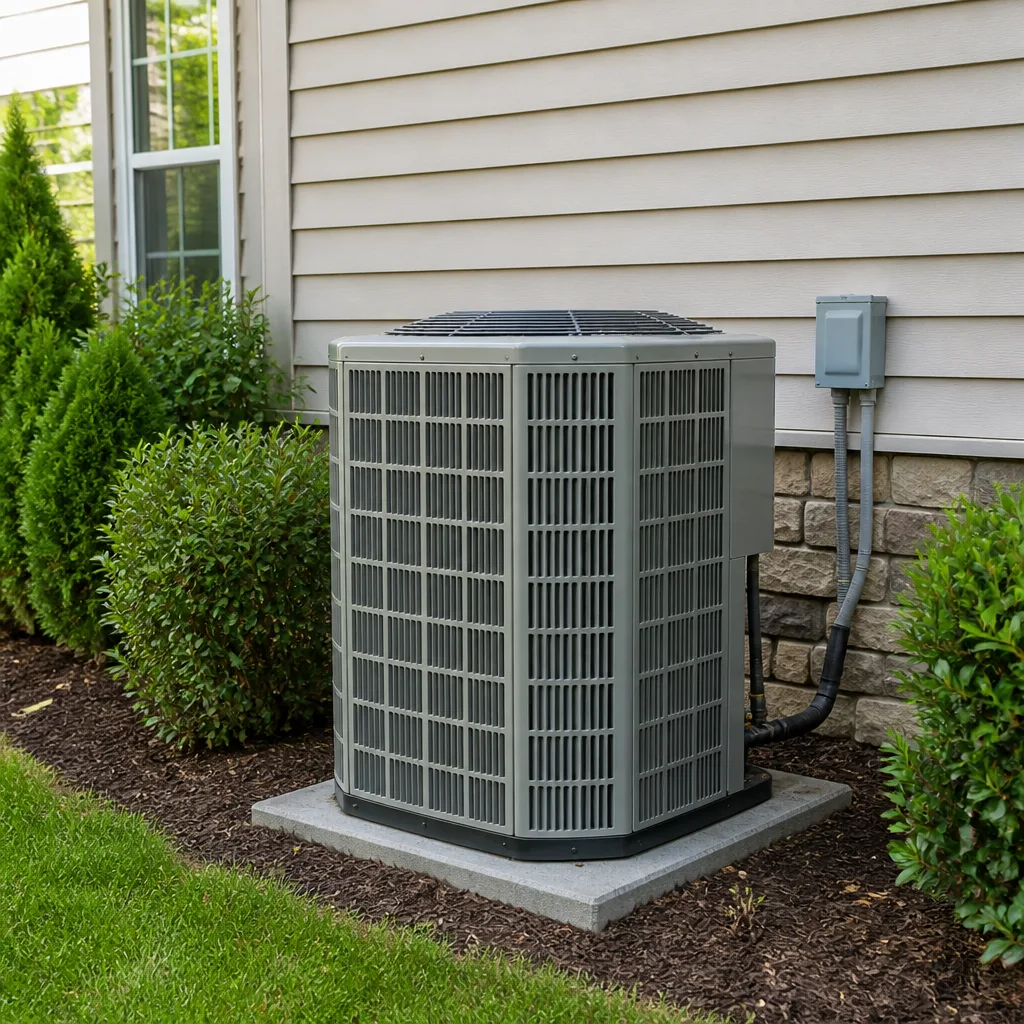 AC repair
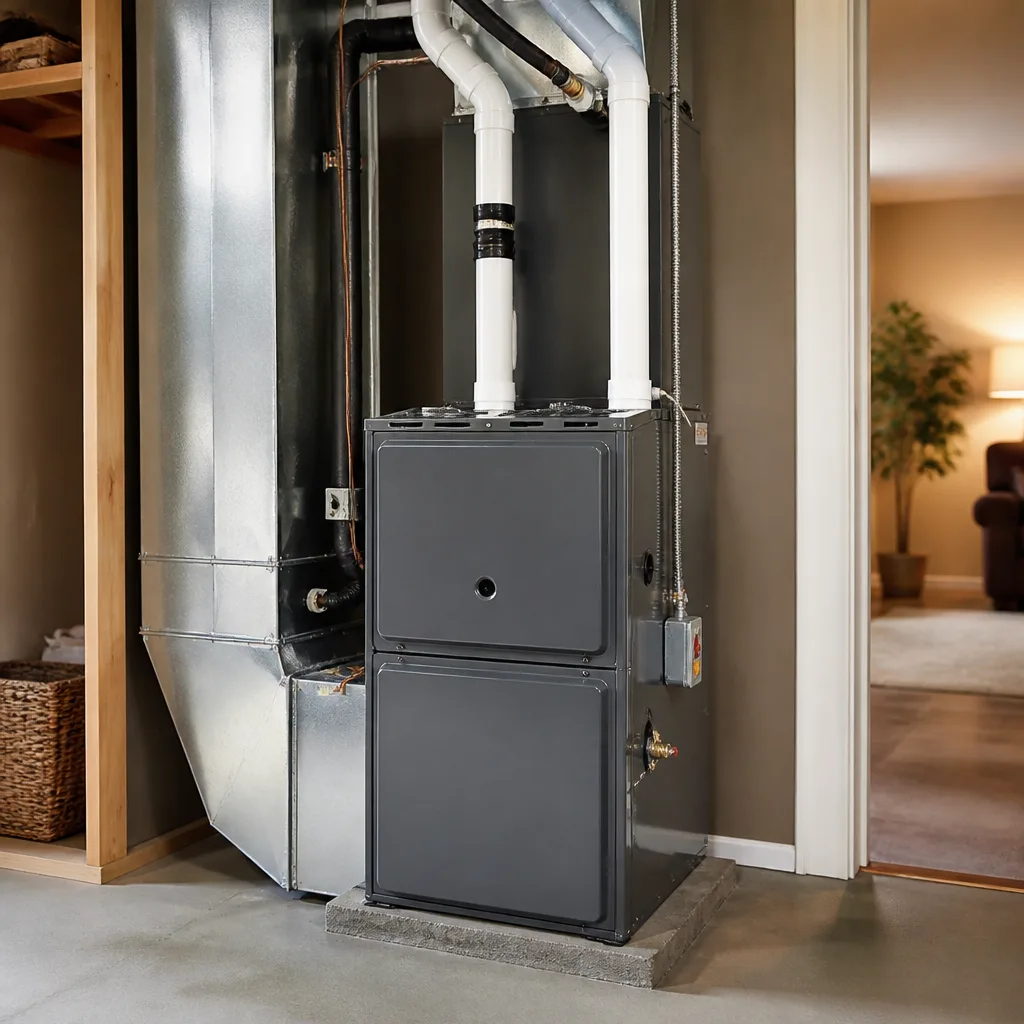 Furnace & heating
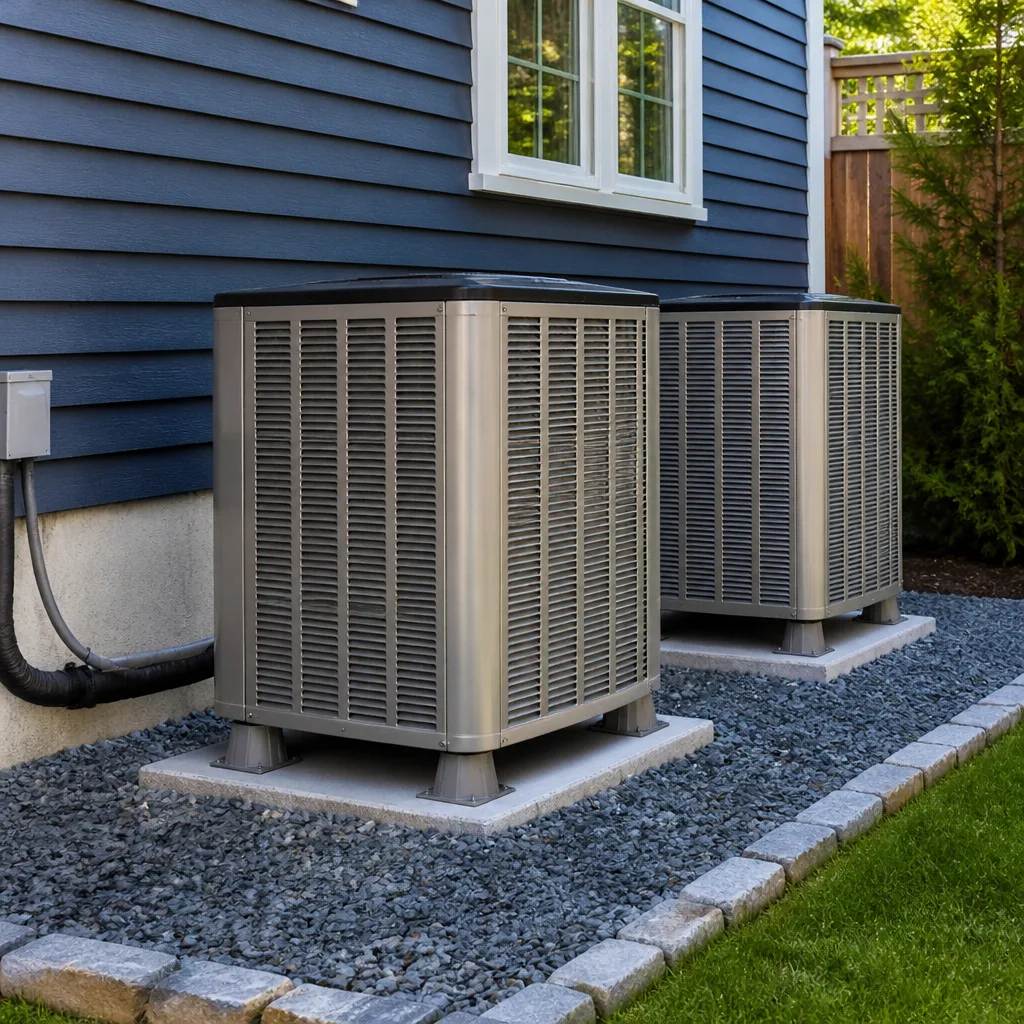 Heat pumps
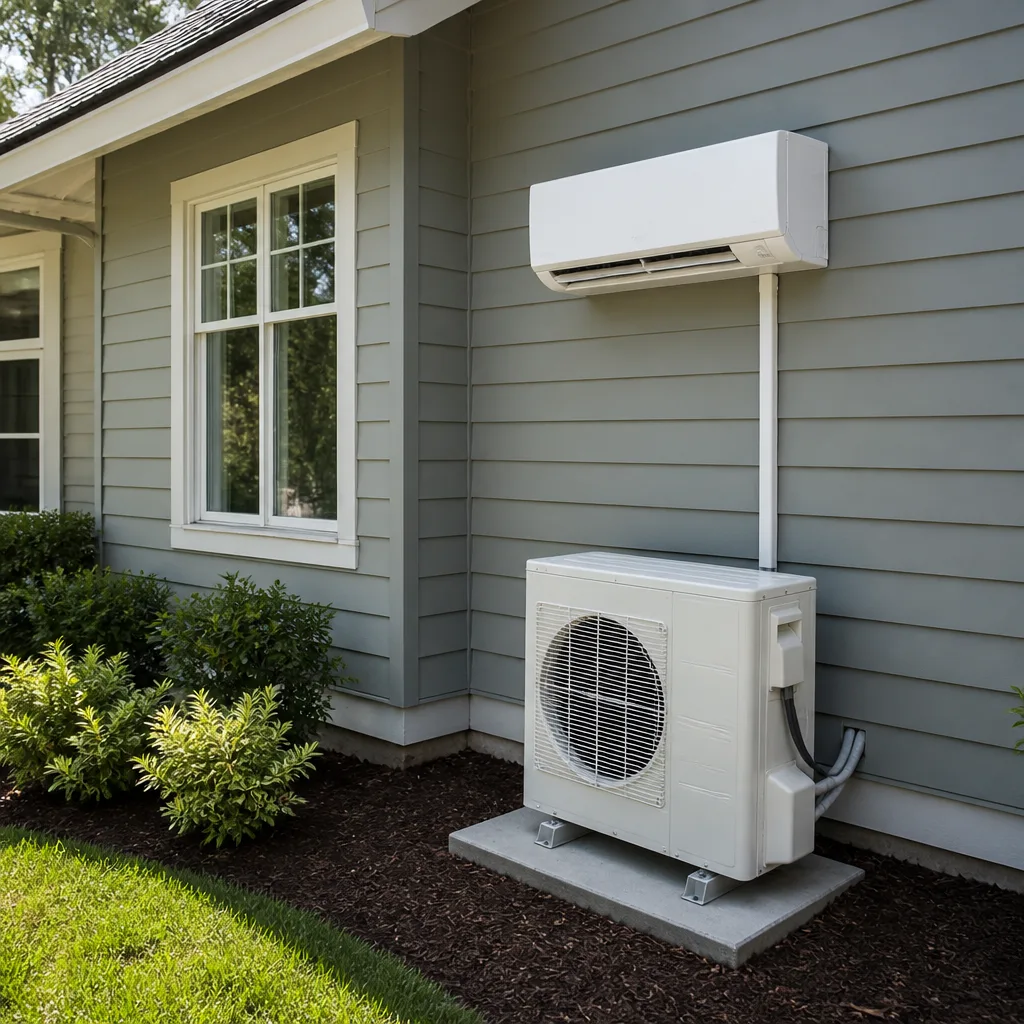 Ductless mini splits
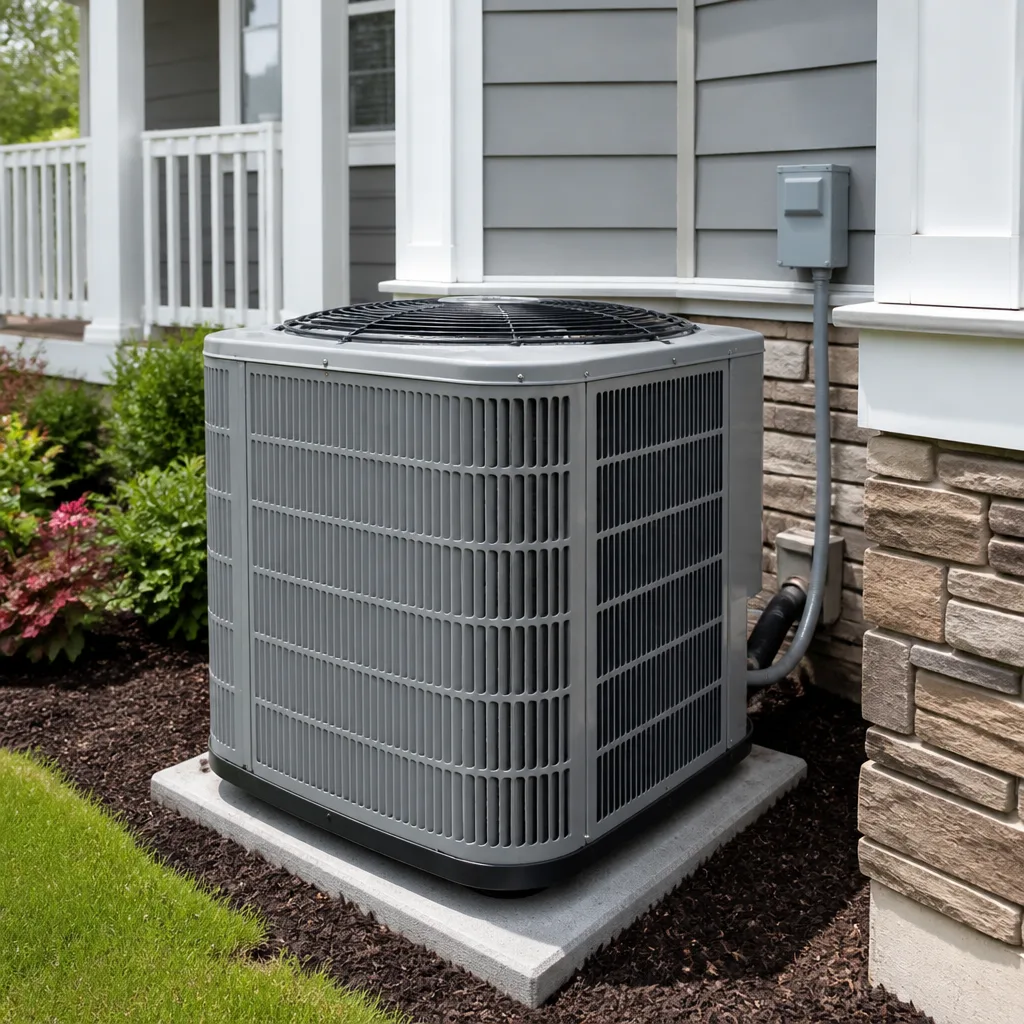 Carrier
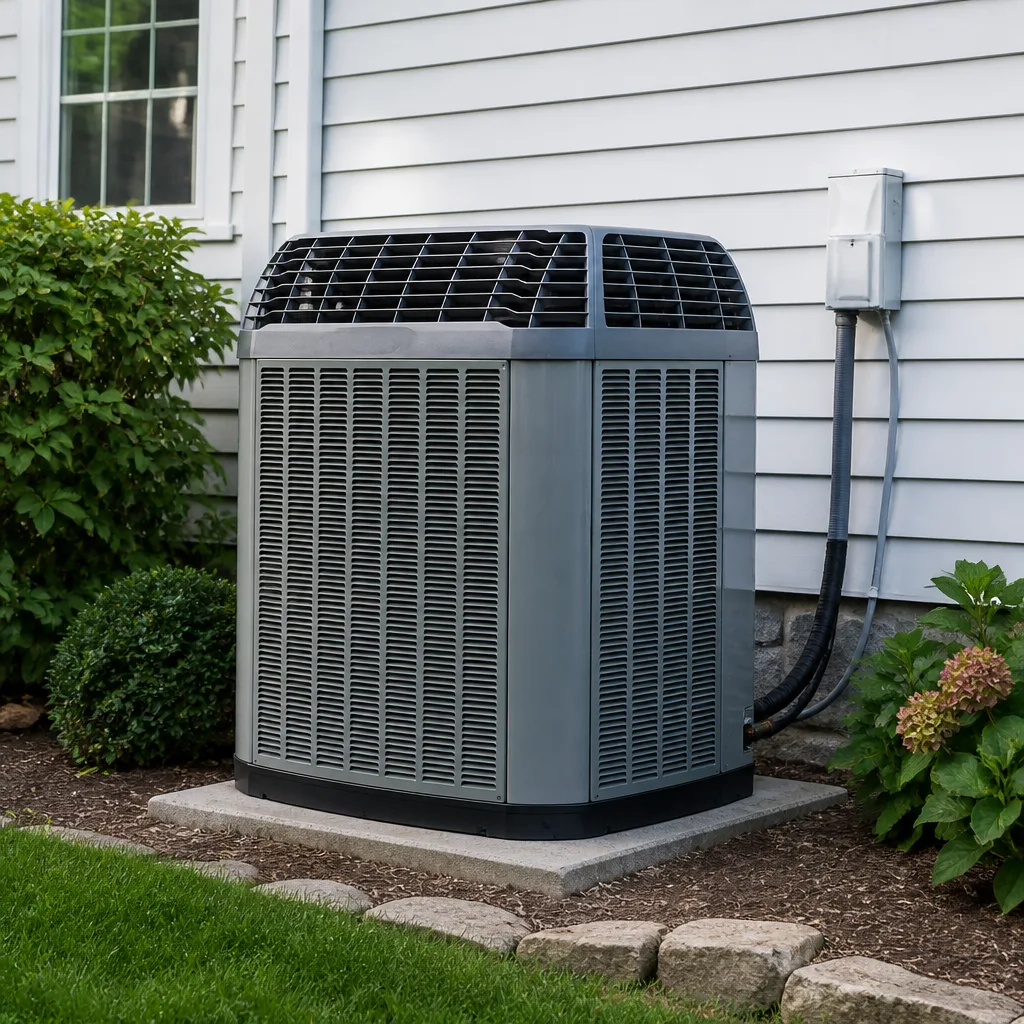 Trane
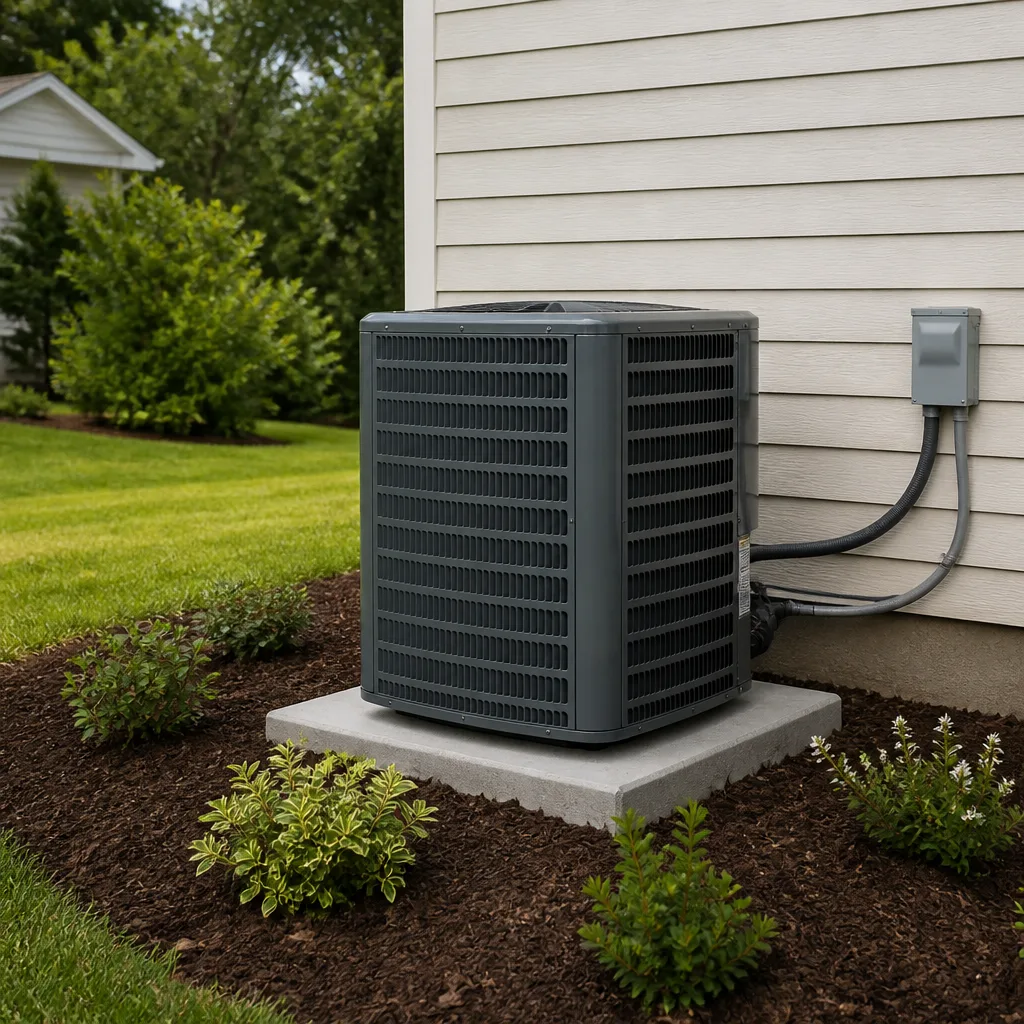 Goodman
Seasonal tune-up and full diagnostic on your Carrier, Trane, or Goodman system - readings shown to you before any repair is proposed
Diagnosis first, numbers second - you approve the repair price before a single part goes in.
Get your free estimateHow to Hire an HVAC Contractor in Fremont: A Step-by-Step Guide
A California C-20 license tells you a contractor can legally do HVAC work in Fremont. It tells you nothing about whether they know how to do a Manual J load calculation, the math that actually determines the right equipment size for your house, or whether they’ll just match the tonnage on your old unit and move on. That gap between “legal” and “competent” is where most homeowners get burned.
This guide is built around the questions that reveal the difference. You’ll learn how to verify a license, what the certifications actually mean, the five technical questions that separate specialists from generalists, and the contract clauses to lock down before anyone touches your equipment.
Quick Answer
Hire an HVAC contractor in Fremont by first verifying their C-20 license through the CSLB, then asking five technical questions about load calculation, permits, brand experience, startup documentation, and combustion safety testing. Compare bids by scope and equipment model, not headline price, and never sign until the contract spells out permit responsibility and commissioning records.
Styles & brands we work with
- AC repair
- Furnace & heating
- Heat pumps
- Ductless mini splits
- Carrier
- Trane
- Goodman
Table of Contents
- Step 1: Verify the C-20 License and What the Certifications Really Mean
- Step 2: Ask the Five Technical Questions
- Step 3: Why Three Bids Often Backfires in Fremont
- Step 4: Check Their Permit History with Fremont Building & Safety
- Step 5: Contract Clauses You Should Require Before Signing
- How Fremont’s Climate and Housing Shape HVAC Choices
- Step 6: Red Flags in the Conversation and the Paperwork
Step 1: Verify the C-20 License and What the Certifications Really Mean
Every legitimate HVAC contractor working in Fremont should hold an active C-20 Warm-Air Heating, Ventilating and Air-Conditioning license issued by the Contractors State License Board. That’s the base requirement. Verifying it takes about two minutes at the CSLB website and it’s the first thing you should do, before you even take a call.
Look for three things on the CSLB record: the license status is “active,” the classification is C-20 (not a general B license alone), and the business name on the record matches the name on the estimate. If the name doesn’t match, ask why. Subcontracting is legal, but the licensed entity carrying your contract should be the one you can verify and the one accountable for the work.
Past the license, the certification landscape gets murky because a lot of it is marketing. Here’s how to sort it:
- NATE certification (North American Technician Excellence) is a genuine competency credential earned by individual technicians through proctored exams. It signals real testing, not a weekend seminar.
- EPA Section 608 is a federal requirement for anyone who handles refrigerants. Any technician touching your AC system legally needs it, so it’s a baseline, not a differentiator.
- Manufacturer factory training matters more than badge logos on a website. A brand-authorized contractor has actually sent techs through Carrier or Trane or Lennox training, which is what lets them diagnose brand-specific control boards and fault codes without guessing.
- Generic “certified” badges with no issuing body named are decoration. Ask which organization issued the certificate and what the exam covered.
The practical takeaway: a C-20 license gets a contractor in the door, NATE and real factory training tell you if they know the equipment they’re standing in front of. Our technicians are trained across Carrier, Trane, Lennox, Goodman, Rheem, York, Daikin, Bryant, and American Standard, which is why we don’t have to guess which brand to recommend when we walk into a home.
Step 2: Ask the Five Technical Questions
These five questions won’t appear on a review site and they won’t come up if you only talk price. They’re the ones that reveal whether a contractor is an HVAC specialist or a sales operation with a truck. Ask them, listen carefully, and note what you hear.
- “How do you size equipment?” The right answer involves a Manual J load calculation based on your home’s square footage, insulation, window area, orientation, and air distribution. A contractor who says “we’ll match what you have” or “we’ve been doing this long enough to eyeball it” is guessing. A contractor who tells you they’ll perform a load calculation, or who already has, is worth talking to further. This matters more in Fremont than in harsher climates, because the equipment sizing affects both comfort and efficiency year-round, and an oversized system short-cycles and never dehumidifies properly.
- “Do you pull permits?” Any equipment replacement should be permitted through Fremont Building & Safety, and the permit should be pulled by the contractor in their name, not left to you. A contractor who says “we don’t bother with permits, it’s just a swap” is telling you they cut corners on the parts you can’t see.
- “What brands do you service and how deep is that experience?” A good answer names specific manufacturers and shows they’ve worked on a range of them. A weak answer is “we service all brands,” because nobody services all brands equally well. We stay within a defined roster because we’d rather know nine brands thoroughly than pretend to cover every model ever manufactured.
- “What startup documentation do you provide?” This one separates the professionals. After installation, a good contractor provides a commissioning record with refrigerant charge verification, static pressure readings, temperature rise, and equipment serial numbers. A contractor who just says “we’ll test it and make sure it works” is not giving you anything you can hold them to.
- “How do you verify combustion safety on a furnace?” If your job involves gas heating, ask specifically about combustion analysis or at minimum a CO test and venting inspection. Any contractor who doesn’t have a clear answer here is not qualified to be working on gas-fired equipment. This is not a ballpark question; lives depend on it.
A contractor who answers these confidently and specifically is already more useful than three who answered “yes, sure” and handed you a price sheet. If they can’t answer, that’s your answer.
Step 3: Why Three Bids Often Backfires in Fremont
The conventional advice is to get three bids and pick the middle one. In HVAC replacement, that math is broken. Bids for the same job in Fremont routinely vary by $3,000 or more, and the difference almost never reflects better labor at the high end or a scam at the low end. It reflects the equipment tier, whether a load calculation was done, and whether the permit and commissioning are included.
When you get three bids, compare them like this instead of by price:
- Equipment model and tier. A Goodman and a Trane system at the same nominal size are different products at different price points, and both may be perfectly reasonable choices for your home. What’s not reasonable is comparing the price of a value-tier unit to the price of a premium unit and treating the difference as markup.
- Scope of work. Does each bid include the line set? The pad? New disconnect? Filter cabinet? Duct modifications? Permits? When you line up the scopes, low bids frequently turn out to be missing items you’ll pay for later.
- Whether a Manual J was performed. A bid without one is a guess, and guesses sometimes come in thousands of dollars apart simply because the contractors sized the equipment differently.
- Warranty terms. Labor warranty length and what’s covered varies widely. Get it in writing on each bid before comparing.
- Startup documentation. Only one of your three bids may include a commissioning report. That one is worth more than the others.
Here’s the alternative approach that works better: get one thorough bid from a contractor you’ve verified through Steps 1 and 2, ask for the load calculation results and the equipment model numbers, and confirm that the scope is complete. If you want a second opinion, ask a different contractor to review the same scope, not to sell you a whole different plan. In our experience, that produces a better decision than collecting three prices for three different jobs.
Step 4: Check Their Permit History with Fremont Building & Safety
Here’s a step most homeowners skip, and it’s one of the most revealing. Fremont Building & Safety keeps a public record of permits pulled in the city. That record tells you whether a contractor actually pulls permits on their jobs or just talks about it during the sales call.
How to check:
- Contact Fremont Building & Safety and ask what’s needed to run a permit search by contractor name and license number.
- Search for permits pulled by the contractor’s license number over the past few years.
- Look at what type of permits appear. You want to see mechanical permits for HVAC replacements and installations, not just electrical or plumbing permits pulled by a general contractor.
- Check whether those permits received final inspection sign-offs. Open permits that were never finalized can hint at unresolved issues.
A contractor with a clean history of permitted HVAC work in Fremont is showing you their process, not just their pitch. A contractor with no permit history at all either hasn’t worked much in the city or has been installing without permits. Either one is useful information.
If you’ve already had an unpermitted install in your home and want to get things corrected, our team handles AC installation with the required permits pulled properly, and we can discuss how to bring a past install up to code.
Step 5: Contract Clauses You Should Require Before Signing
A handshake and a price on the back of a business card isn’t a contract. HVAC replacements involve real money and real liability, and a proper contract protects you if things go sideways. Require these clauses, no exceptions.
- Permit responsibility. The contract should state that the contractor will pull all required permits in their name, at their expense, and provide you with the permit number. It should also state that final inspection is included.
- Equipment specifications. Full model numbers and serial numbers for both indoor and outdoor units, plus the manufacturer name. This is what allows you to price-shop parts in the future and verify you got what you paid for.
- Manual J load calculation results. The calculated heating and cooling loads for your home, and confirmation that the equipment selected matches those loads. If a contractor refuses to add this, they’re likely to have skipped the calculation entirely.
- Startup and commissioning documentation. A written deliverable that includes refrigerant charge, static pressure, temperature split, and any other measured values. This is what protects you if the system doesn’t perform as expected.
- Warranty details. Manufacturer warranty term and coverage, labor warranty term and what it includes, and the process for filing a claim. Ask specifically what voids the warranty (improper installation is the most common answer, which is ironic but real).
- Payment schedule. Progress payments are normal, but the final payment should not be due until the system passes inspection and you receive the commissioning report.
- Change order process. How additional work is priced and approved, in writing, before it happens.
- Cleanup and removal. Who removes the old equipment, who disposes of refrigerant per EPA rules, and what condition they leave the work area in.
Contract templates vary and we’re not going to pretend any single clause list is universal, but these items are the ones that protect Fremont homeowners in practice. Any contractor who bristles at putting them in writing is telling you something.
How Fremont’s Climate and Housing Shape HVAC Choices
Fremont sits in a climate zone that surprises a lot of homeowners moving in from other parts of the country. Summers are warm but not brutal, winters are mild, and the homes here were mostly built for a balance of cooling and heating rather than one extreme. That has real implications for how HVAC decisions get made.
Cooling season is real. Fremont gets enough summer heat that a properly sized AC is not a luxury, and homes built in the postwar decades often have original equipment that’s undersized, oversized, or poorly matched to the ductwork. Older housing stock around the Centerville and Niles districts sometimes has single-pane windows and modest insulation, which changes the load calculation in ways that a generic “one ton per 500 square feet” rule of thumb will get wrong.
Winters are mild but not negligible. Furnaces here mostly run at part load, which means short cycling and uneven heat distribution are common complaints. That’s not usually an equipment failure; it’s often a sizing or duct design issue. A specialist who understands how the furnace and AC interact will catch this kind of cross-system problem, and a pure cooling or pure heating contractor may not.
Neither extreme dominates. That’s the point. Equipment recommendations here should be built around your specific home’s load profile, not a generic feeling about what “most homes need.” We recommend based on what the math says, and we can do that honestly because we stock no inventory and carry no single brand exclusively. If a Carrier or a Trane or a Goodman is the right fit for what you’ve told us about your home and your budget, that’s what we’ll recommend. If it isn’t, we’ll say so.
If you need service today and want to talk through what you’re seeing, our team covers Fremont AC Repair and we’re happy to troubleshoot what you’re describing before you commit to a full replacement decision.
Step 6: Red Flags in the Conversation and the Paperwork
The technical questions in Step 2 are designed to trip up weak contractors. So is watching for these red flags during the process. Any one of them on its own might be a coincidence. Several of them together is a pattern.
- “We priced it without looking at your ductwork.” Duct condition affects system performance and equipment sizing. A contractor who quotes without inspecting the duct system is skipping half the job.
- “Our price is good today only.” HVAC equipment pricing doesn’t move that fast. Pressure tactics are a sign of a sales-driven operation, not a technical one.
- “We don’t need a permit for that.” If the job involves replacing equipment, it needs a permit. No exceptions.
- “We’ll figure out the size after we pull the old one.” This means they didn’t do a load calculation and are guessing. You’ll be paying the consequences for years.
- “We only carry one brand.” Not necessarily disqualifying, but it means the recommendation is on a rail. You should ask why that brand and only that brand is right for your home.
- “Full payment up front.” A progress payment schedule is normal. Paying the full amount before any work starts is not, and it removes all your leverage.
- Your written estimate doesn’t list model numbers. You cannot evaluate a price if you don’t know what you’re buying.
Common Mistakes to Avoid
- Choosing the middle bid because it’s the middle. Bids vary in Fremont by thousands of dollars for legitimate reasons like equipment tier and scope. Picking the median without comparing scope and model numbers is picking at random.
- Ignoring the load calculation entirely. A contractor who skips the Manual J is guessing, and a wrong-sized system is the most common cause of premature failure and comfort complaints.
- Not verifying the C-20 license on the CSLB site. A business card and a website don’t tell you the license is active, current, or in the right classification.
- Skipping the permit check on Fremont Building & Safety. An unpermitted install can complicate resale and voids some manufacturer warranties.
- Signing without equipment model numbers in the contract. You have no way to verify what you’re getting.
- Accepting “we service all brands” as an answer. It’s a non-answer. Ask which brands and how deep the experience goes.
- Paying in full up front. Hold final payment until the system passes inspection and you have the commissioning report in hand.
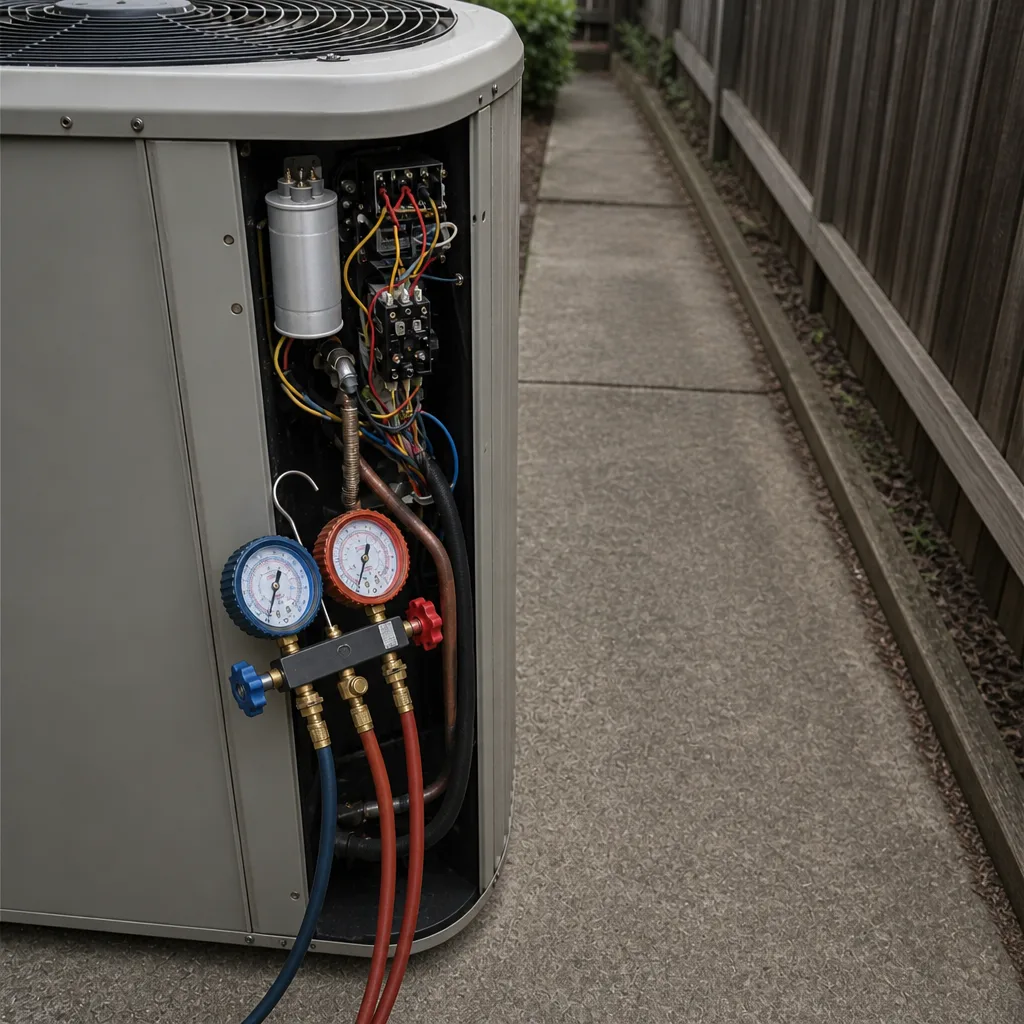
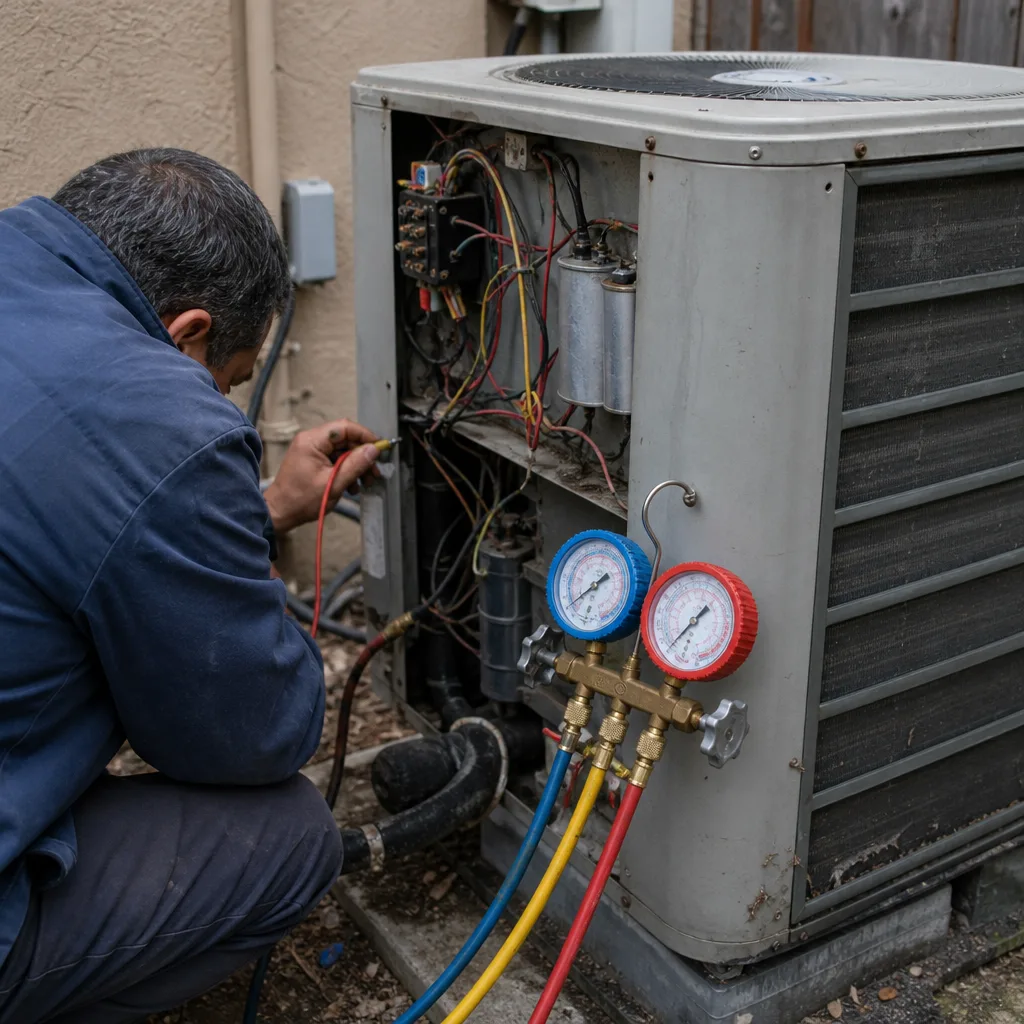
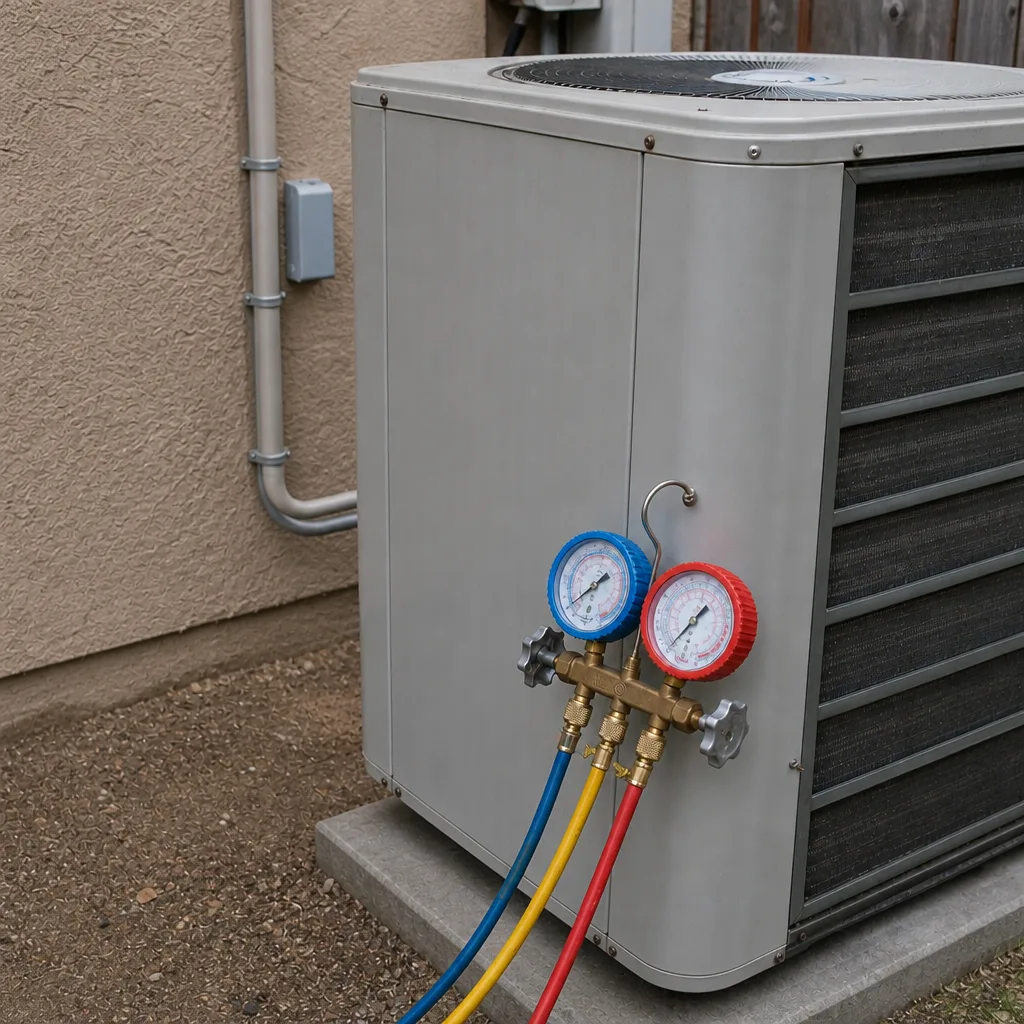
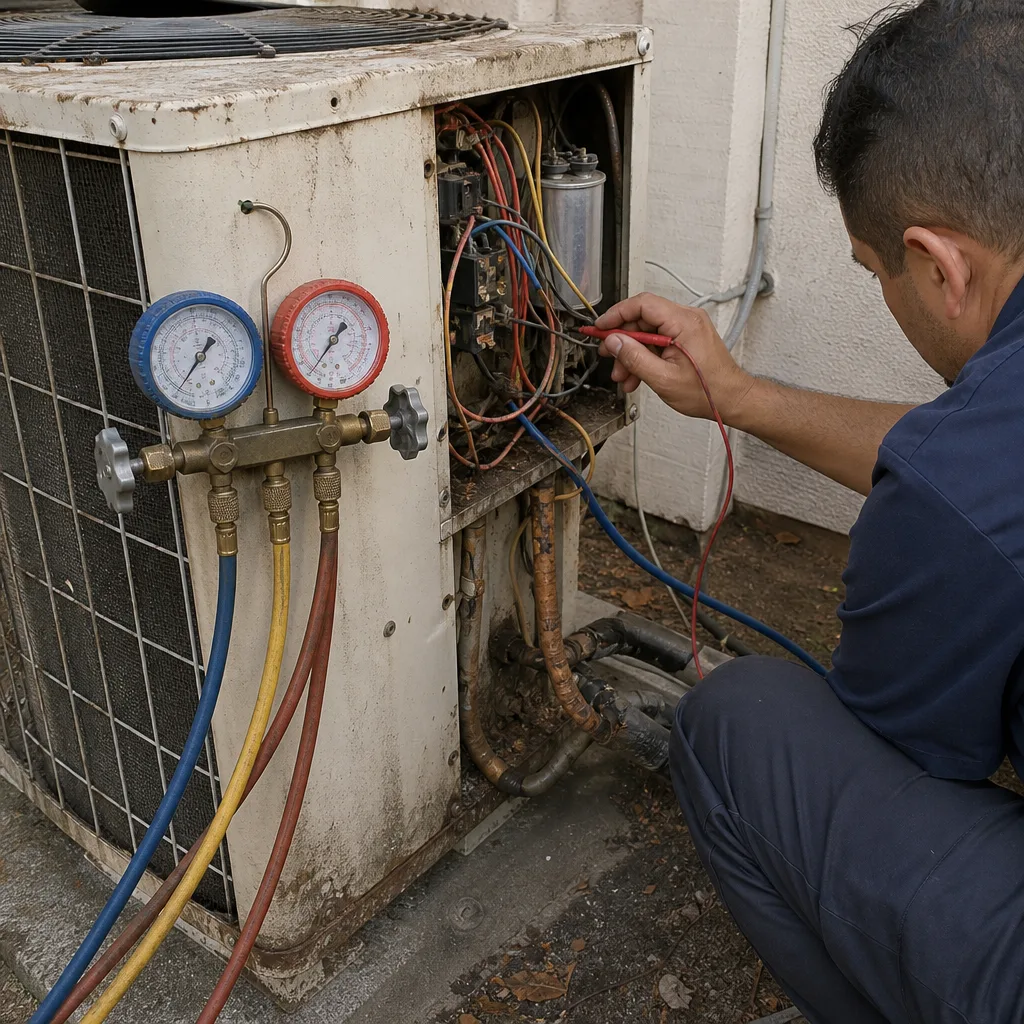
See the difference
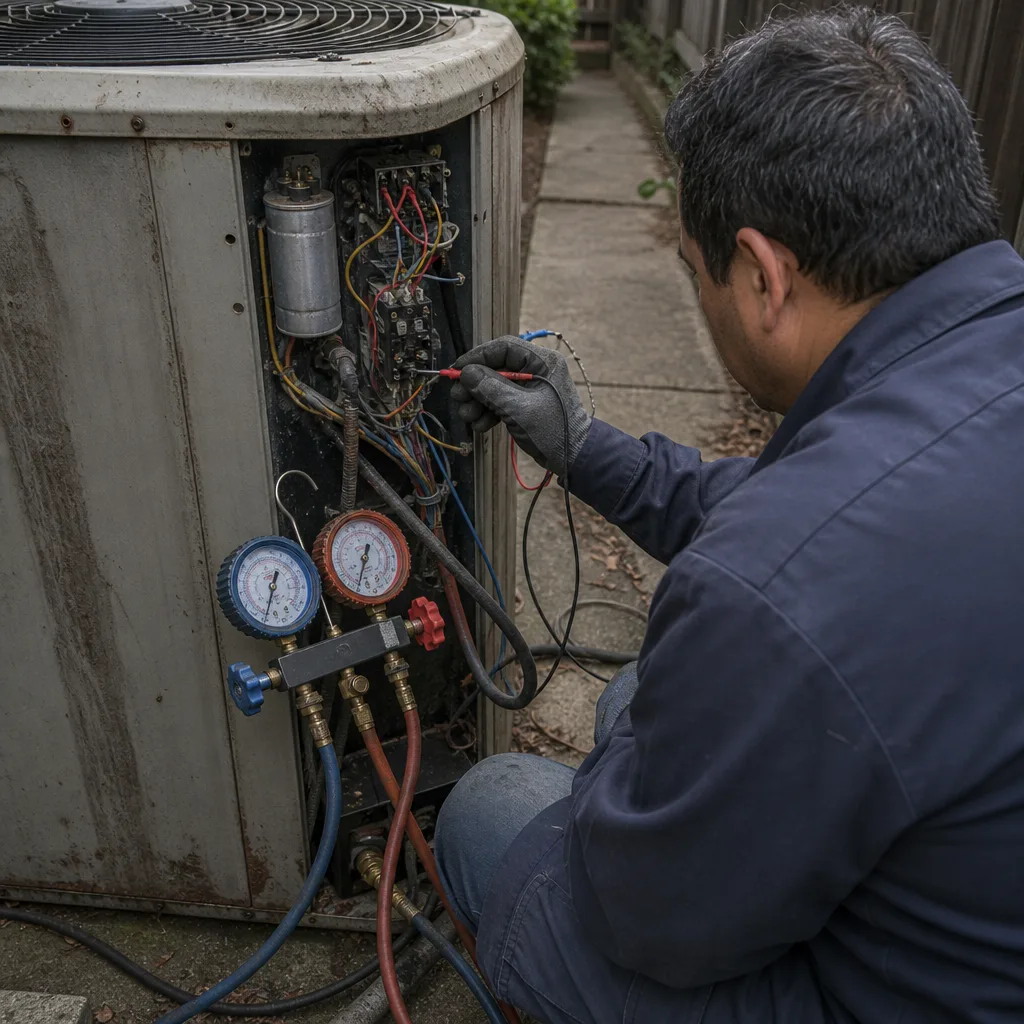 Before
 After
 Before
 After
 Before
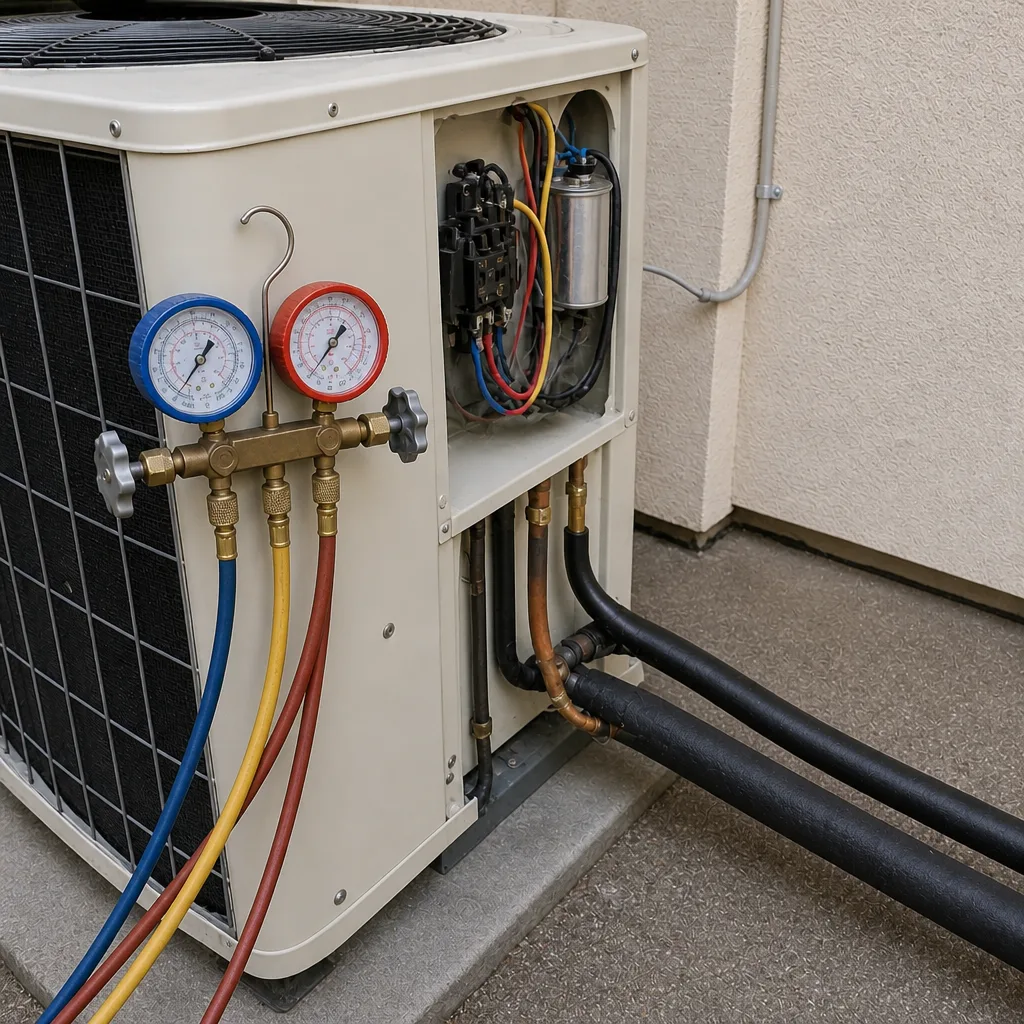 After
When to Call a Professional
Some issues you can troubleshoot yourself. Others are genuinely dangerous or expensive to get wrong. Call a professional when you notice a gas smell near the furnace, when a breaker trips repeatedly on the HVAC circuit, when the AC runs but doesn’t cool the house, when the furnace short-cycles or won’t stay lit, or when your system is over 15 years old and you’re facing a major repair. On the safety side, we can’t be direct enough: gas leaks, electrical faults, and combustion problems are not do-it-yourself territory. Get a trained technician on the job.
Fremont AC Repair offers free estimates in Fremont for both furnace repair and replacement decisions. Call (855) 473-9061. We answer 24/7. Fast dispatch from 7am to 7pm, Sunday through Friday.
Frequently Asked Questions
Look them up on the CSLB website and confirm an active C-20 license with the business name matching the estimate. The C-20 classification is what qualifies a contractor specifically for HVAC work in California.
It tells you what size equipment your home needs based on measured inputs: square footage, insulation, window area, orientation, and air distribution. Without one, the contractor is guessing, and a wrong-sized system will cost you comfort and efficiency.
No. Three bids sound reasonable until you realize they may be for three different jobs: different equipment tiers, different scopes, different permit handling. Get one thorough bid with documented scope and model numbers, then compare any additional bid against that same scope.
Run a permit search through Fremont Building & Safety by the contractor’s license number and look for mechanical permits with final inspections. A history of permitted HVAC work in the city is a real signal; a blank history is also information.
NATE is a genuine competency credential earned through proctored exams by individual technicians. EPA Section 608 is a federal requirement for anyone handling refrigerants, so it’s a baseline rather than a differentiator. Ask which certifications the specific person showing up actually holds.
Talk to a licensed contractor about bringing it into compliance. Unpermitted installs can complicate a future sale and may affect manufacturer warranty coverage. Call (855) 473-9061 for a free estimate and we can walk through the situation with you.
The Bottom Line
Hiring an HVAC contractor in Fremont comes down to a few things: verifying the C-20 license through the CSLB, asking the five technical questions and listening for specific answers, and treating bids as documents to be compared by scope and model rather than by headline number. Check the permit history through Fremont Building & Safety, require permits and commissioning documentation in the contract, and stay alert for pressure tactics and vague answers. Do those things and you’ll hire a contractor who actually knows the equipment in your home, not one who shows up with a truck and a payment QR code.
Contact Us
We cover installation, repair, and full replacement for cooling and heating systems, and we work on equipment from nine major brands. Whether you’re in Fremont deciding between a repair and a replacement, or you’re in a nearby city like Fremont and need a second opinion on a bid, call us. The estimate is free and the price you get in writing is the price you pay for that job.
Call (855) 473-9061 for a free estimate. We answer 24/7. Fast dispatch from 7am to 7pm, Sunday through Friday. Our technicians have up to 8 years of experience, and the whole team is factory-trained across Carrier, Trane, Lennox, Goodman, Rheem, York, Daikin, Bryant, and American Standard. Nine major brands, one call.
Written by the team at Fremont AC Repair.